
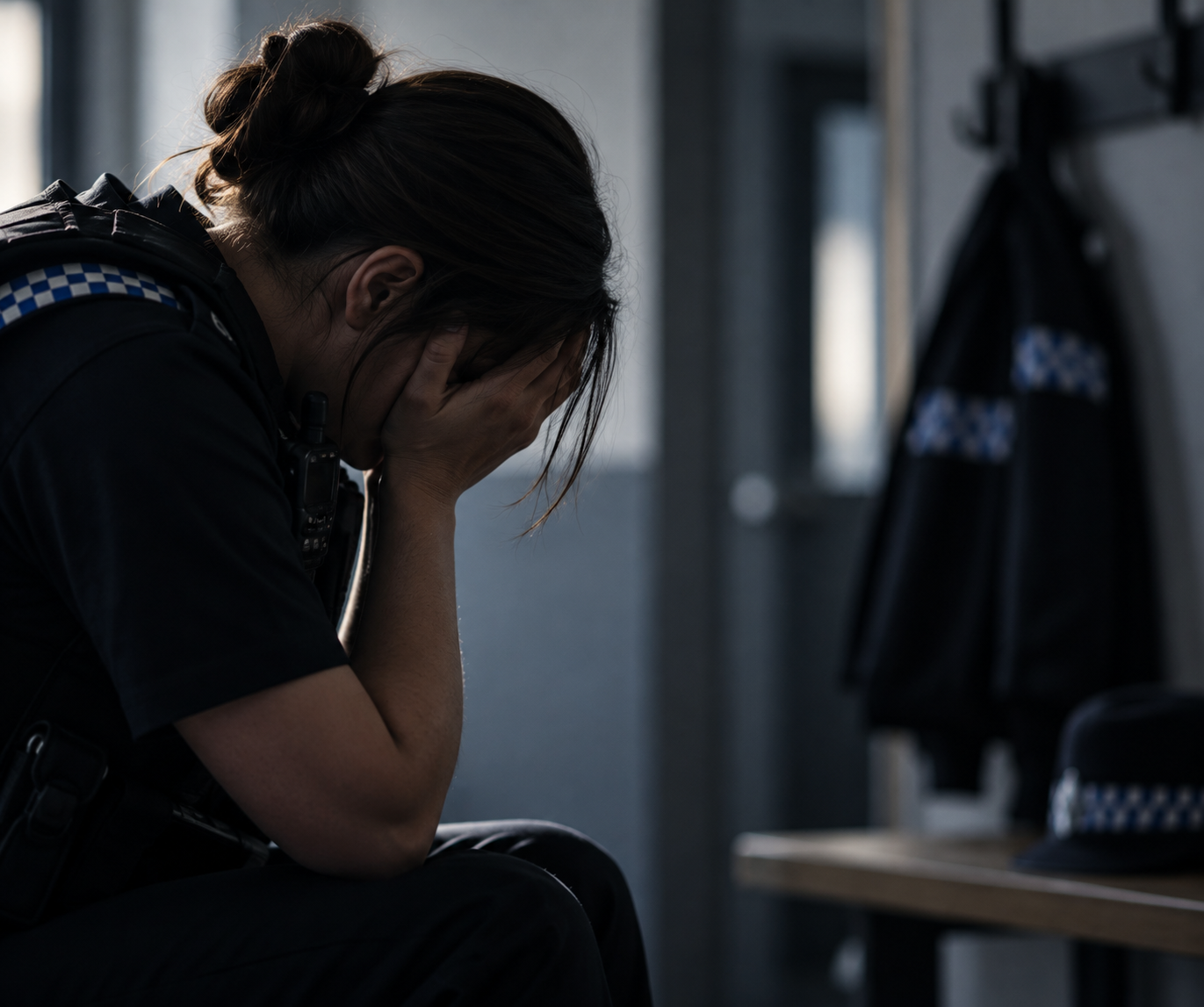
How a prolonged misconduct process pushed one serving officer to breaking point.
I am a serving police officer and for the past couple of years I have been going through a misconduct process that has had an impact on almost every part of my life.
I am sharing my experience anonymously because I am still serving and I am worried about what could happen if I was identified. I have already been through enough and I do not want speaking honestly about the effect this process has had on me to create further problems.
What happened has changed my relationship, my finances, my mental health and the way I look at the organisation I work for. At one stage I reached the point where I did not want to be here anymore.
I do not say any of this because I believe police officers should be protected from accountability. I made a mistake at a call and I have always accepted that. What I struggle with is the way the process has been handled since then, how long it has taken and the effect that uncertainty has been allowed to have on my life.
I made the wrong decision and accepted that
The process began following an incident where decisions were made that, looking back, were wrong. I messed up at a call and I have never tried to hide from that or pretend otherwise.
I held my hands up and accepted responsibility for the decision I had made.
I was initially served with gross misconduct papers, which was incredibly difficult to deal with. The matter was subsequently reduced from gross misconduct to misconduct, before that decision was later overturned and I found myself facing gross misconduct again because of decision-making involving a colleague.
That change was particularly difficult for me to understand and deal with. I felt as though I had been led to believe the matter was going in one direction, only to suddenly find myself facing the most serious level of disciplinary proceedings again.
From my perspective, the process became something much bigger than simply being held accountable for a mistake.
The impact of being told you face gross misconduct
It is difficult to explain to somebody who has never experienced it what receiving that news can actually feel like.
Being told that I was facing gross misconduct was one of the most painful things I have ever experienced. That might sound excessive to somebody looking at it from the outside, but when your career, income, reputation and future suddenly feel as though they are hanging in the balance, it consumes you.
The uncertainty follows you everywhere.
My sleep suffered and my relationship began to break down under the pressure. There were periods where I either barely ate or ate too much because I was struggling to cope with what was happening.
Eventually my partner left me because of the stress surrounding everything. I was told that I had become a shell of the person I used to be.
That is difficult to hear from somebody you love, but looking back I understand why they said it.
The process had changed me.
There were times when I did not want to carry on
At my lowest point, I had thoughts about taking my own life.
That is something that is incredibly difficult to admit, but it is also one of the reasons I believe these conversations need to happen.
When somebody is facing a misconduct process, the organisation may see paperwork, hearings, evidence, decisions and timescales. The person going through it experiences something very different.
They are wondering whether they will still have a job. They are worrying about paying their bills. They are trying to explain what is happening to their family. They may be watching relationships fall apart while still having to function normally and somehow continue with everyday life.
For me, the impact went far beyond work.
My family became extremely worried about me, my relationship ended and I struggled financially for around two years. I lost friendships and became aware of just how concerned members of my family were about where my mental health was heading.
Despite everything, I have continued to show up and take each day as it comes.
Losing a colleague made everything harder
During this period I also lost a colleague to suicide.
Trying to process that loss while going through my own misconduct proceedings was horrific. It made the issue of mental health during disciplinary processes feel even more immediate because this was no longer something that could be discussed in abstract terms.
These processes involve real people, and those people can already be carrying pressures that nobody else can see.
I have evidence relating to the support I sought following my colleague's death and believe more should have been done to help me with my mental health during that period.
I do not believe welfare can be treated as something separate from the disciplinary process. If an organisation makes a decision that leaves somebody living under months or years of uncertainty, then it also has a responsibility to recognise what that uncertainty can do to a person.
Accountability should not mean forgetting the person
I am not asking for officers to avoid responsibility when mistakes are made.
I accepted that I had made the wrong decision and I was prepared to be accountable for it. My concern is with the way the process operates around that accountability and whether enough thought is given to proportionality, timescales and welfare.
One of the biggest problems from my experience has been delay. When somebody is facing an allegation that could potentially end their career, every additional month matters.
You cannot simply put someone's life on hold and assume that the uncertainty is not doing damage while they wait.
I also believe there need to be better arrangements for dealing with cases so that unnecessary delays are reduced. Having too few people available to make decisions or assess cases inevitably creates bottlenecks, and it is the officers and their families who live with the consequences of those delays.
There also needs to be proper welfare support throughout the process, particularly where there are obvious signs that somebody's mental health is deteriorating.
I am still here
This experience has taken a huge amount from me, but I am still here.
I am still showing up and I am still taking things one day at a time.
I am sharing this because I know I will not be the only officer who has sat at home wondering whether their career is over, whether their relationship will survive or whether anybody within the organisation actually understands what the process is doing to them.
There will be officers going through that right now.
Some will have made mistakes and accept responsibility for them. Some will dispute the allegations completely. Some will ultimately be cleared and others will face sanctions.
Whatever the eventual outcome, there should still be a basic recognition that the person being investigated is a human being.
Professional standards and accountability are necessary in policing, but I do not believe accountability has to come at the expense of someone's mental health. Investigations should be proportionate, decisions should be made as quickly as reasonably possible and welfare should mean more than simply asking somebody whether they are okay.
I cannot change what the last couple of years have done to me or get back everything I have lost during that time.
What I can do is talk about it.
If sharing what happened to me contributes in some small way to changing how another officer is treated in the future, then at least something positive may come from an experience that has affected so much of my life.
SHARE THIS STORY
Your story has the power to save a life.
By sharing your experience, you could help someone else feel less alone and give them the courage to seek the support they need.
"The bravest thing I ever did was speak out. It felt like a massive weight was lifted, and knowing it helped others gave me purpose."